- The Supply Times
- Posts
- The Doomsday Dollar
The Doomsday Dollar
The Supply Times Issue #93

Naseem Malik
February 12, 2026

Image: Financial Times
Hello, dear readers!
The dollar’s recent dive against major currencies has split economists into two camps: one group is warning of a doomsday scenario where the greenback loses its status as the world’s primary reserve currency. Others tell us there’s nothing to see here, and that we should look beyond the current blip to take assurance from the dollar’s enduring strengths. Read on below to see arguments from both sides.
Also, as the AI jobpocalpyse looms, should white-collar workers quit their jobs and retrain in blue-collar roles like plumbers and other trades? Not so fast. Employment data is not showing a surge in blue-collar positions, and even these roles are unlikely to stay immune from advances in physical robotics for long. More on that below.
This issue features the usual bunch of AI Insights and recommendations for the week's podcasts, books, shows, charts, and tweets, followed by a final chuckle.
Let’s get going.

Industry Highlights: Are We Nearing the Doomsday Dollar Scenario?
The US dollar has long reigned as the world's reserve currency, but recent turbulence has sparked fears of a "doomsday" collapse: a nightmare where global confidence evaporates, triggering a mass sell-off of Treasuries, skyrocketing interest rates, hyperinflation, and widespread economic havoc.
With the dollar down about 10% against major currencies since early 2025, amid policy uncertainties and fiscal concerns, some wonder if we're on the brink. Yet, voices like IMF Director Kristalina Georgieva urge caution against overreacting to short-term dips.

Let's examine both sides: the mounting risks suggesting we're inching closer, and the reassuring factors that say otherwise.
On the "yes" side, the dollar's vulnerabilities appear more pronounced than ever. Today, foreign investors have shifted dramatically toward riskier US assets, with stocks now comprising 58% of foreign-owned American holdings, up from 21% post-2008 crisis.

This profit-driven appetite leaves the greenback exposed to US underperformance. Last year, American stocks lagged global peers by five percentage points, the widest gap since 2009, amid tariff fears and AI bubble worries. Once ironclad safe havens, Treasuries are losing their allure; yields rose during recent market wobbles, signaling that turmoil is originating from within the US itself through large deficits, growing debt, and erratic policymaking.
Hedging activity adds fuel to the fire. Investors are increasingly protecting against dollar exposure by selling greenbacks, driving down its value. This surged in April last year amid tariff announcements, with foreign flows favoring hedged ETFs over unhedged ones. If large institutions diversify further, toward Europe, Asia, or even gold, the result could be a vicious cycle: weaker dollar reduces US assets' weight in global indices, prompting more sales and further devaluation. A precedent exists from 2002-2008, when US stocks underperformed and the dollar fell 40%. Back then, central banks were hoarding reserves; now, the dollar's share in global reserves has dropped from 72% in 1999 to 57%, with alternatives like the yen or gold gaining ground.

Kevin Warsh's potential Fed leadership introduces more uncertainty, given his hawkish leanings and political ties, potentially eroding the central bank's independence. In this view, the dollar's appeal now hinges precariously on outperforming assets, and any sustained slip could unravel its "exorbitant privilege."
Conversely, the "no" camp argues these fears are overblown. Georgieva emphasizes that the dollar's dominance stems from enduring strengths: the depth and liquidity of US capital markets, the economy's sheer size, and its entrepreneurial drive. She warns against getting "carried away by short-term variations," noting no imminent shift in its global role.
The recent 10% decline, while notable, could even benefit emerging markets by easing dollar-denominated debt burdens and lowering interest costs. China's reduced holdings (now under 2% of US Treasuries) mean its portfolio tweaks pose less systemic risk than in past decades. Despite some diversification, sovereign investors poured $132 billion into US assets in 2025, nearly double 2024's figure, chasing unique opportunities in innovation and profits. No rival currency is poised to dethrone the dollar, and while reserves have diversified, demand remains robust. In essence, the greenback's foundations are solid; fluctuations are normal, not apocalyptic.
Ultimately, the doomsday scenario isn't here yet, but it's not impossible. Risks from investor shifts and policy unpredictability are real, yet the dollar's core advantages endure. As a younger Warsh once said, this status must be "earned and re-earned."
Looking ahead, the term “doomsday” may be a little overblown. The shift in currency power is more likely to be gradual and messy than dramatic: the dollar will probably remain central for some time even as the euro, yuan and other payment systems nibble away at its share, producing a more plural and functionally fragmented system rather than a single, obvious successor. The winners will be those with deep, open markets, trusted institutions and the ability to provide liquidity in crises, while digital innovations and regional anchors could reconfigure how money moves without toppling the incumbent overnight.
For businesses and policymakers the best bet is not to back one currency but to stay nimble: diversify exposures, watch policies on capital openness and reserve use, and track which currencies gain traction in trade invoicing and payment infrastructure.

The Future of Work: Should I switch to a blue-collar job?
Thinking of taking a blue-collar job to avoid the AI jobpocalypse? Not so fast.
"Train to be a plumber." That's the advice Geoffrey Hinton (the "Godfather of AI") gave in a recent interview, pointing out that AI will take a long time to match humans at physical manipulation tasks. For many people watching white-collar roles like paralegals, call-center workers, or entry-level office jobs get nibbled away by tools that can draft documents, handle queries, or analyze data faster and cheaper, the idea has real appeal. Why sink time and money into a degree if AI is coming for knowledge work? Why not pivot to hands-on trades that seem inherently more robot-resistant?
It's tempting. And in some ways, it's not wrong. The AI boom itself is creating demand for certain skilled trades. Politicians on both sides of the Atlantic have leaned into this narrative: a revival of well-paid, non-degree jobs tied to infrastructure, manufacturing resurgence, defense spending, and the energy demands of AI.
The reality, though, is more complicated, and far less reassuring, than the "go blue-collar and you're safe" story suggests.

First, the much-hyped "blue-collar boom" hasn't materialized at scale. In the US, manufacturing employment has been flat to declining in recent years, hovering around 12.7 million workers with small fluctuations rather than a surge. Post-pandemic rebounds faded, and automation (including AI-driven predictive maintenance and robotics) continues to shrink the overall need for bodies on the factory floor. Construction has seen some gains from data-center projects and infrastructure spending, but the net addition is modest—thousands here and there, not the transformative wave promised. Similar patterns show up in Europe: Germany has lost hundreds of thousands of manufacturing jobs since the pandemic despite defense hiring, and the UK has fewer manufacturing and construction roles than pre-2019 levels in many areas.
Even where demand exists, it's often spiky, seasonal, or concentrated. Building a data center might require hundreds of contractors for 12–18 months, but once it's online, one or two hundred people can run even the largest facility. Telecom engineers cycle in and out with broadband rollouts, but the steady, long-term monitoring roles are harder to fill and smaller in number. Recruiters are scrambling for technicians, often poaching from the military or hospitals, or training apprentices, yet the pool remains tight because of an aging workforce and limited trade-school pipelines.
Then there's the nature of the work itself. Many blue-collar roles come with instability that white-collar jobs increasingly offer: self-employment, contract gigs, no guaranteed sick pay or maternity leave, physically demanding hours, and budgets that can dry up overnight. Construction and related fields are often "very, very male," long-hour environments with precarious employment models. As one analyst put it, non-graduates who once might have entered manufacturing are now in more "no-collar" service jobs like couriers, cleaners, and dog walkers, that carry higher risk and less stability.
Even the trades aren't immune forever. Hinton himself caveated his plumber advice with "until the humanoid robots show up." Advances in robotics and embodied AI could eventually handle pipes, wiring, and repairs. More immediately, many "blue-collar" jobs already require significant skill and training, often degree-level or equivalent in specialized areas. Analyses of key industrial sectors (advanced manufacturing, clean energy, etc.) show that 80% of critical roles demand at least degree-level qualifications. The workforce is getting more skilled overall, not less. And for easy repair jobs like a clogged dishwasher, product owners are getting more adept at following LLM-generated instructions to DIY the problem rather than calling a plumber.

South Park, always ahead of the zeitgeist, did an episode on this very subject last year. Check out the scene where Randy advises his daughter to stay out of school, not go to college, and learn real skills that will still be profitable in the post-AI universe. In his words: “AI can do everything better than we can, except for stuff that requires arms”.
The broader picture is that AI isn't neatly carving out "safe" zones by collar color. It's reshaping everything: compressing entry-level white-collar opportunities while making blue-collar work more specialized, cyclical, or augmented by tech rather than replaced outright. Wages for lower-paid workers spiked post-pandemic due to shortages, but college graduates are pulling ahead again in many places, and rising living costs hit the middle hard.
So if you're eyeing a trade as an escape hatch from the AI jobpocalypse, pause. Some paths, like data-center technician or skilled mechanics, offer real opportunity right now, especially with shortages in aging fields. Apprenticeships can be smart, debt-free alternatives to university. But don't romanticize it as a guaranteed shield. The jobs aren't as plentiful, stable, or future-proof as the headlines suggest, and the conditions can be tougher than office life.
The smarter move might be adaptability itself: build skills that combine hands-on ability with technical literacy, stay open to retraining, and recognize that no job is entirely AI-proof in the long run. The infrastructure fueling AI needs humans today, but tomorrow's tools might change that equation faster than we think.
AI Insights

AI progress has moved far beyond what most people realize: Matt Schumer’s long-form post on X is … worrying, to say the least. He claims AI is already at the stage where it can confidently take on the majority of white-collar work. As he writes: “The people building this technology are simultaneously more excited and more frightened than anyone else on the planet.”
Musk releases xAI vision: Moon-based factories, space data centres, and full computer automation that could eventually design rocket engines autonomously. It’s all here in Musk’s 45-minute all-hands video, posted on X.
New Chinese AI model undercuts US competitors: GLM-5 reportedly rivals OpenAI and Google across multiple benchmarks, with a native “Agent Mode” that can turn prompts into ready-to-use documents in multiple formats.
The Supply Aside
📕 Read - Leading Change by John P. Kotter
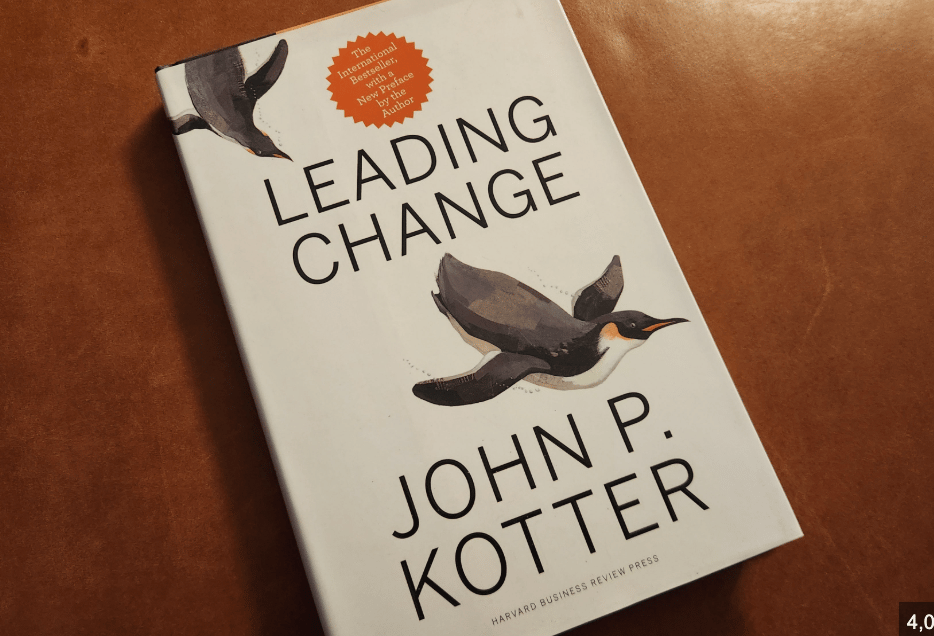
Leading Change is a story‑driven guide on how to pull off big organizational shifts by focusing on people as much as systems. Kotter argues most major changes fail because leaders ignore the human side, and he offers an eight‑step roadmap: 1) Create urgency, 2) Build a strong guiding team, 3) Craft a clear vision, 4) Rally broad support, 5) Remove obstacles, 6) Score short‑term wins, 7) Keep momentum going, and 8) Lock the changes into the culture.
What Else I’m Reading
What triggered the crypto selloff?: Bitcoin plunged over 50% from its October peak to February lows as geopolitical worries, fading pro-crypto momentum and thin market liquidity spooked investors, hurting crypto firms and ETFs and leaving the market directionless.
AI is coming for major business software: AI tools like Anthropic’s Claude are rapidly automating tasks across corporate America, prompting firms to experiment, cutting some software spending and rocking software stocks. Yet experts say incumbents with proprietary data, scale and compliance-heavy functions will adapt and survive rather than be instantly replaced.
Workers are “friction-maxxing”: As a form of pushback against the “tyranny of convenience” brought about by AI, workers are looking to make their jobs harder, for example by reintroducing in-person meetings, or reading entire reports instead of AI summaries.
📺 Watch - The Chain: How the World Works

The Chain: How the World Works shows us how global systems like supply chains, logistics, finance and institutions interlock, using real-world stories that make abstract concepts memorable. It offers timely insight into vulnerabilities from disasters to geopolitics and cyberattacks, and shows why single shocks can ripple worldwide, which is valuable for anyone following markets, policy, or risk.
The series is useful both for professionals and curious viewers, highlighting which firms, countries and strategies thrive and which are exposed so you can spot trends and draw your own conclusions. Personally, I enjoyed the presenter’s description of supply chains as an “invisible hand”, or hidden engine of the world, only becoming visible to the consumer when something goes wrong.
👂 Listen - The Knowledge Project: Diana Chapman

The “Drama Triangle” is a dysfunctional social model involving three roles: the victim, the villain, and the hero. If you’re the victim, says Diana Chapman, you are probably stuck in that state because of an overwhelming desire to avoid discomfort.
In this episode, Chapman explains how people’s urge to avoid discomfort leads to a state of stunted personal growth: “Discomfort is the catalyst for most human beings to change is to finally face and feel the cost of the patterns that they’re in.”
🧠 Think: Built To Own
The 3G Capital story is a masterclass in disciplined ownership. They didn’t chase hype. They bought iconic brands like Burger King and treated them like underperforming assets that needed focus, not fanfare.
Their formula was simple and ruthless. Zero based budgeting. Cut the fluff. Hold managers accountable. Operate like owners, not renters. It wasn’t always pretty, but it worked. The returns spoke for themselves.
What sticks with me is the mindset. 3G did not behave like temporary capital flipping assets. They stepped in as if they were going to live with the consequences of every decision.
In a world obsessed with momentum trades and financial engineering, that feels almost old school. But maybe that’s the point. Ownership is not a transaction. It is a posture.
Charts of the Week


Quote of the Week
“We are what we repeatedly do. Excellence, then, is not an act, but a habit."
- Aristotle
Tweet of the Week

The Final Chuckle

|

Thanks so much for reading. I’d love to know what you think about this issue and how I can make it more useful to you. If you have suggestions or topics you want to see me address, email me at [email protected]!
-- Naseem